Showing posts with label Unique Architecture. Show all posts

Green Architecture - Will Really Impact Construction


What is Green Architecture? It is the concept of designing buildings with a view of reducing negative impact of construction on environment and the people. Green Architecture encompasses the entire gamut of factors associated with structural designs ranging from conservation and efficient use of natural resources, use of indigenous material, concepts of recycling to optimizing the finances. It is literally an approach to get "Much More with Much Less". Did you ever wonder why those mud-caked, thatched roofed old houses remained so cool during summers? The answer lies in the advantageous use of local produce and the environment by the indigenous people in building those houses. Modern Green Architecture aims at identifying such indigenous practices and incorporating them into contemporary architectural designs. Green Architecture makes favorable use of natural sunlight and wind flow patterns. Green Architectural designs use energy saving devices such as fluorescent lights and solar heaters to make them more energy efficient. Structural designs incorporate concepts such as on site energy generation of wind, biomass and water.

A holistic Green designed building looks at all aspects of living like a self-sustaining ecosystem. For example, wastewater can be recycled to water the garden and organic waste generated by the occupants can be converted into manure in compost pits, which can be used for the garden. Reduction in the use of synthetic materials is one of the initiatives of Green Architecture. Toxic fumes generated by aging synthetic paints are a health hazard. Some synthetic building insulation material contains formaldehyde, a known carcinogen, which has affected the health of countless citizens. Green Architecture reduces the use of such material so as to create healthier environment. Green initiatives require concerted national and international effort.

The Leadership in Energy and Environment Design (LEED) is a US initiative that sets standards for design and construction practices more in tune with nature having the least negative effect on the surrounding environment and the people. The LEED standard gives different weights to factors such as sustainable sites, water efficiency, energy and atmosphere, material and resources and indoor environmental quality. Based on the weights, certification points are calculated which are graded as Certified, Silver, Gold and Platinum. Platinum is the most environment friendly and healthy LEED certification. The US LEED standards are being used by Canada, India and Israel for some of their Green Architecture projects. Other countries too have adopted their own versions of Green Architecural practices. Some of the countries adopting own standards for Green Architecture are Australia, France, Germany, Japan , Malaysia, Mexico, New Zealand and UK.

The serious environmental conditions facing the world requires a sustained effort by the building industry to make a difference. Such an effort can be initiated through Green Architecture as the standard approach for all construction.

Green Architecture - Will  Really Impact Construction

Green buildings are not only be designed for a present use,

German airport - Great Architecture Design

Berlin, airport

BBI-Info Tower appeared at the main airport of Berlin, intends to become a significant element of an infrastructure.

Spiral Tower in Berlin Airport

The tower will function as an observation post with which will supervise process of building of a new complex of the airport.

Tower in Berlin airport

Helicoid structure

10 World Wonders Of Modern Architecture | World Architecture


The end of the XXth century was marked with the architectural boom. Grand erections similar to ancient constructions classified as the wonders of the world began to arise one by one all over the globe. Many of them became the places of tourist pilgrimage even while not being completed. Ten of such projects have already gained the worldwide fame.

Great Egyptian museum in Giza.

Great Egyptian museum in Giza is about the same architectural wonder as the Giza pyramids themselves. As a matter of fact, it is the basis of architectural development of modern civilization. It is a massive row of chambers enfolding the scenery, with triangular roofs like in pyramids. The space of the largest archaeological museum in the world exceeds thousands of square meters.

The Tate Modern art gallery in London.

The Tate Modern art gallery in London is the largest-scale gallery in the world. And now the construction of the second 11-story glass building with 23 thousand square meters of space has been started. It is planned to complete the construction in time for the 2012 Olympics. The use of new areas will allow to solve the problem of over-crowding of the gallery that was visited by 4.9 million people in the year 2006.
The cost of the project, designed by Swiss architects, is 215 million pound sterling. The expenses for extension to gallery are expected to be comparable to the main construction bill.

Burj Dubai.

The skyscraper in United Arab Emirates pretends to be the tallest building in the world.
There will be the fastest elevators and the "highest" communications. When the construction is completed the final height of Burj Dubai will be more than 700 meters, it will have more than 160 floors. Now the builders work at 484.1 meters height. Interestingly: the weight of concrete used in building construction equals approximately the summarized weight of 100 thousand elephants.

Simon Wiesenthal Museum in Jerusalem.

Simon Wiesenthal Center suggested an idea to create the Museum of Tolerance in Jerusalem in the year 2002. Famous American architect Frank Gehry developed the model of museum complex. It is situated on the plot of land between "Gan Ha'atzmaut" park and Nahlat Shiva in the West Jerusalem. 120 million dollars were invested in this construction. The museum that is officially called " Simon Wiesenthal Center's Museum of Tolerance in Jerusalem" occupies the territory of 14 thousand square meters. It has been built from Hierosolymitan stone with the insertions of titanium allays that is Gehry's favourite construction material.

The third terminal of the Capital International Airport in Peking.

The country that builds the biggest dam, the longest bridge and the greatest shopping mall just ought to have the most immense construction plot while erecting the largest airport terminal in the hugest airport. The future third terminal will occupy 17 tiers, will stretch for nearly 4 kilometres, will require 35 thousand builders and will be capable of handling 53 million passengers in a year.

Olympic stadium in Peking.

Huge complex will be constructed by the year 2008. Its sizes are impressive: 330 metres lengthwise, 220 metres widthwise, with 62 meters in height, it will hold a 100 thousand persons. Though it is still unclear whether there will be as many lavatories there as for example in the famous Wembley stadium.

Ground Zero Memorial in New York.

Ground Zero is the memorial on the site of the former World Trade Center towers destroyed during terrorist attacks on the 11th of September. The huge construction with the slabs on which all the witnesses and sympathizers sign, now yields in size only to Holocaust memorial. The Tower of Freedom will be as tall as 1776 foots - 541 meters.

MAXXI - National Museum for Contemporary Art in Rome.

Zaha Hadid, the only one lady-architect in the world who won the Pritzker Prize, has designed MAXXI - the Roman Centre for Contemporary Art, it is a sophisticated concrete erection that simultaneously impresses with extravagance and monumentality. It is impossible to measure the length of the building since it has an extremely odd shape; it is even compared to spaghetti.

CCTV - the Chinese Television building in Peking.

CCTV - the Chinese Central Television building - is to be completed by the year 2008. This building - the skyscraper - is impressive due to its unusual shape. Chinese television head quarter will have 500.000 square meters of total space and will become one of the 300 skyscrapers that are to be constructed in the down town of Peking. The estimated cost of the project is 600.000.000 euros. Its infrastructure includes restaurants, hotels and theatres.

The Bishopsgate Tower in London.

It is another skyscraper of unusual configuration. Today it is the largest construction in London's history. Its height is going to be 288 meters - it was originally proposed to be 307, but civil aviation authority prohibited such height. The tower will become one of the tallest buildings in the whole Europe. Recently the project was renamed The Pinnacle. The date of the construction first phase is planned for the beginning of the year 2008. The building will also be ecological - it will be covered with the solar cell panels.

FCD Yongsan - Landmark Tower

FCD Yongsan - Landmark Tower
The FCD Yongsan Landmark Tower was conceived and designed by Asymptote and engineered by Thorton Tomassetti to be among the most important and elegant tall buildings of the century. The design of this project utilizes a powerful idea of coupling and stringing together three towers, though each is structurally stable and produces a powerful, iconic image in its own right. The Landmark Tower has been designed to confront the notion of a single spire or object and, instead, utilizes the number three in a powerful way to create a singularity and presence unlike any other. The inherent symbolism and reading of this tower will appeal to the global community and place a focus on South Korea, specifically Seoul’s aspirations for the future. The design of the Tower predicts a new century of accomplishments, of grandeur coupled with modesty and of success coupled with effort and growth. It is a symbol of harmony, reconciliation, possibilities and beauty.
Vake Multifunctional Center - symbiosis of elegance

In January 2008 was awarded First Prize in the international competition to design the Vake Multifunctional Center in Tbilisi, Georgia. The Design vision for the forty-story tower, which will serve as the new corporate headquarters for the Cartu Group, is a symbiosis of elegance and structural components that incorporates high-performance design elements.

New sky-line of Paris | World Architecture


La Defance will start big building boom soon. The projects is designed from wellknown architects, like Daniel Libeskind, Norman Foster, Jean Nouvel etc. But it doesn´t change that most of the projects are quite boring. On our opinion the best project is from sir Foster, which is diferent with his simplicity and surpreising interieor space.


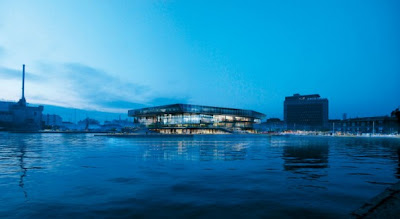
"The cantilevering roof plate is a dominant component of the architectural expression; during the day and especially in the evening, when the transparent façade allows the building to glow from the inside.

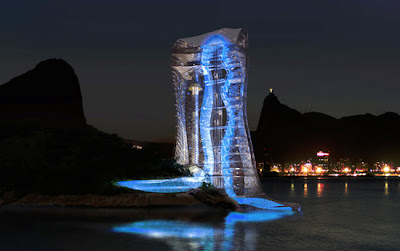
Rio De Janeiro great Architecture - lighthouse tower

Rio De Janeiro great Architecture -  lighthouse tower
'Lighthouse tower' is a proposal by Mikou design studio for the Brazilian city of Rio de Janeiro. Designed as an arch at the entrance to the city, the tower is rooted on the island of Cotunduba and is accessible itself to the sea via a large jetty. It consists of observation points, an auditorium, skywalk, bungee jump platform, climbing tower, gyrodrop, cafétéria, souvenir store, urban balconies, multi-usage space.


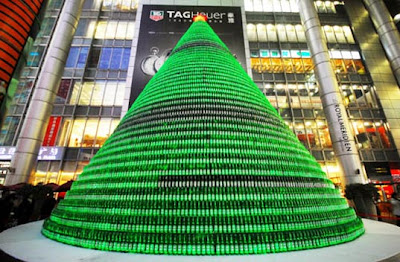
Unique Architecture - Christmas Tree Made from 1,000 Beer Bottles
At the start of every Christmas season, environmentalists inevitably spark the real-versus-artificial tree debate. But this year, Chinese designers decided to take an entirely different approach to celebrate the holiday, crafting a huge tree from 1,000 Heineken bottles. The massive sculpture is currently providing some festive flair to Nanjing Road in Shanghai, China.


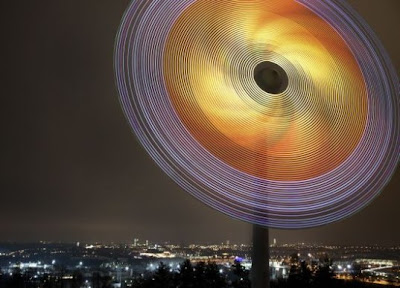
The Largest Wind Turbine in The World

The Largest Wind Turbine in The  WorldWhat Christmas is complete without a giant spinning illuminated star? This one is the largest in the world and just happens to be made up of LED lights, allowing it to use the same amount of energy as a common hairdryer! The revolving LED superstar was designed and built by Siemens and is currently mesmerizing viewers in Munich. Check out our amazing pics of this brightly lit installation with 9,000 LED lights spinning away into the night.

The green residential building complex designed by Faro Architecten BV has won a competition to design an urban villas and residential tower of Almere, Netherlands. 57 residences are in the tower and the green balconies will serve as public space.


Completed with photovoltaic and PCM panels, this building will save energy throughout the year. The gardens of the tower will live with rain collected water.

To achieve suitable indoor thermal conditions, one has two basic options:
either invest heavily in the purchase, installation, operation and maintenance
of HVAC systems;
or reduce energy costs by applying bio climatic principles to building
design.
The operating costs of heating, cooling, ventilation and lighting can be
significant, especially if the design and/or operation of the building is
suboptimal. Considering the fact that operational and maintenance expenses
grow with time and that problems usually get worse unless action is taken, it
makes good sense to place an emphasis on energy conservation right from
the start. In fact, energy savings add up over the years and translate into
cost savings.
Energy conservation has become an important aspect of building design and,
in some countries, a code-mandated requirement. The main objective is to
achieve indoor environmental quality, while balancing the requirements
for energy efficiency and overall energy conservation in an
environmentally acceptable manner.
Building retrofit or renovation costs are much lower than the costs for building
demolition and the construction of a new building. Energy conservation in
existing buildings is a priority, given that the lifetime of buildings is usually
more than 50 years and the existing stock of buildings is much greater than
new construction. Energy conservation measures for new and existing
buildings are already in process within several Member States of the
European Union, in accordance to the new Directives by the European
Commission on “Energy Conservation in Buildings”.
Energy conservation for heating and the reduction of heat losses are mainly
governed by thermal insulation of the building envelope. Thermal insulation
materials have improved significantly over the past decades in terms of
efficiency, safety and functionality. The current average heat loss of new
European buildings is about half of what it used to be for the pre-1945 building
stock. Nevertheless, the majority of existing buildings are poorly insulated,
since in most countries national thermal insulation regulations have been
enforced during the last decades. For example, in Greece, where the national
Thermal Insulation Code became effective in 1981, only 5% of the existing
residential building stock is insulated.
Heat losses through the building envelope are responsible for about 10-
25% of the total energy consumed in buildings, depending on outdoor weather
conditions and building materials. Consequently, a well insulated building
envelope can significantly reduce thermal losses in winter and heat gains in
summer, thus reducing energy consumption and operating costs, and
improving the indoor thermal conditions. The addition of an external cladding
façade, at an appropriate spacing from the main building “body”, on existing
and new buildings, creates an air gap that acts as a thermal buffer zone, thus
reducing heat losses in winter and heat gains in summer. Thermal insulation
5
materials should be added on the building “body”, for additional energy
savings. These rules apply to both existing and new buildings
Energy conservation for cooling of buildings is of primary concern in
Mediterranean countries. During the past decades, the use of mechanical air
conditioners (A/C) in southern European countries has increased dramatically.
This is primarily due to an increase of the living standards and the reduction in
price of A/C units. There is a clear trend of increasing sales with gross national
product (GNP) in EU member states. In Greece, sales of A/C units showed an
unprecedented increase of 900% during the late 1980s due to a series of heat
waves over a period of three years. The impact on the electric energy
consumption has been alarming. For the first time peak electric energy loads
occurred in Greece during the summer period. Similar trends have been
observed in most southern European regions, the Middle East, the United
States and Japan.
Solar control (shading) is a key design measure for minimising the heat gain
of indoor building spaces. The use of various shading devices to attenuate the
incident solar radiation can significantly reduce the cooling load and improve
the indoor thermal and visual comfort conditions. External shading is more
effective overall because the main amount of incident solar radiation is
intercepted outside the building and can be dissipated away from internal
spaces.

Private library - Future Library Concept Architecture design

Private library - Future Library Concept Architecture design
Plan view
Private library - Future Library Concept Architecture design

Longitudinal section view
Private library - Future Library Concept Architecture design
Short section view
Private library - Future Library Concept Architecture design

Building of Swatch in Tokyo


Shigeru Ban design building in the heard of Tokio for the company Swatch. Building is separated into 4 parts, by Swatch´s luxury labels. Single parts are break up by superfloors with a hanging gardens. Others floors are anchorage and so the hanging gardens have visuale dominantion.

New Tamayo Museum Michel Rojkind concept ideaNew Tamayo Museum Michel Rojkind concept idea
New Tamayo Museum overlooking Mexico City - BIG and Michel Rojkind win cultural competition in Mexico.

"Understanding that contemporary art spaces pretend to be more important than the art they contain, our proposal arises from the scheme of requirements previously studied by our clients, assuring maximum functionality in each area while focusing on the development of art projects. By enhancing the program and understanding the topography, a balance between form, function and visual impact for this important space was created. Once the functional part was improved, we could give attention to details that make the space not only a culture enclosure, but also a building that understands its surroundings to distinguish itself and transform from a simple form to a powerful symbol, controversial, but ideal to lodge this new space."
http://architectures-world.blogspot.com/


A quick acknowledgment of a faint signal from the usually noisy Dezeen: O+A's “conceptual floating swimming platform for the river IJ in Amsterdam.”

UUrban Beach - “conceptual floating swimming platform for the river


We wouldn't mind seeing several of these “urban beaches” plopped down on Chicago's lakefront beaches, perhaps as a sort of super designery groynes to slow the erosion of alien sand. Weighty, crisp and angular, one could be mistaken for believing that a Tony Smith sculpture has been appropriated as an infrastructure of leisure — or that it's inspired by disused, water-filled Midwestern quarries re-purposed into swimming and diving hot spots. (If Studio Gang can unconvincingly claim that Aqua was somewhat inspired by Great Lakes geomorphology, then we can similarly go grocery shopping for referents.)

UUrban Beach - “conceptual floating swimming platform for the river


Of course, a better proposition would be to liberally sprinkle them on the banks of the Chicago River, as this would necessitate mitigating water pollution and massive rezoning, which also would require equally monumental alteration of the city's rotten political landscape — all precursors we definitely wouldn't mind seeing coming to pass (with or without an urban beach in the end).

In fact, we're beguiled by the possibility (however remote) of O+A's jagged shorelines spurring or accelerating profound changes in how Chicago relates to its river. Some cities buried theirs under soil and concrete; Chicago, for the most part, turned its back to it, cordoning off public access with a veil of industrial and commercial thicket, made more exclusive by bubble-era condominiums and converted lofts. With some choice editing of its brief, this Urban Beach would thus be rescripted as a vision of a “forever free and clear” Chicago River, a battle cry to daylight our river, an antidote to our collective alluvial amnesia.

Urban Beach - “conceptual floating swimming platform for the river


Here are some photos of the La Grande Cour in Amsterdam, Concep Idea by Netherlands by Meyer en Van Schooten Architecten,

Nice concept Building Architecture

Nice concept Building Architecture

Nice concept Building Architecture
top